the short answer
IV glutathione and at-home subcutaneous injections deliver the same molecule. The IV goes directly into a vein at a clinic; the subcutaneous form goes under the skin at home. Research on glutathione's benefits comes largely from IV clinical experience, but the molecule doing the work is the same in both cases.
What actually differs is logistics: how often you can dose, what it costs per session, and whether you need to schedule a clinic visit. For most people, at-home dosing wins on consistency. You can take it weekly instead of whenever you can book a drip, and consistent exposure over time is what the biology rewards.
how iv glutathione got its reputation
IV glutathione became the benchmark the same way most IV therapies did: clinics got there first. A physician who wanted to prescribe glutathione in the 1990s or 2000s had limited options. IV was the most established delivery method, and it allowed clinicians to administer higher doses with direct entry into the bloodstream.
The IV experience has some real things going for it. Delivery is direct. Doses can be higher than what subcutaneous provides in a single administration. And some patients report a noticeable energy or clarity shift during or after a session, though that response varies and the research doesn't fully explain it.
The practical limitation: it requires a clinic visit. Most people manage one every few weeks at best, which means dosing is sporadic rather than consistent. Glutathione levels turn over quickly in the body, so a large infusion every few weeks gives you peaks and troughs rather than steady support.
what the at-home subcutaneous form does
The subcutaneous form is injected under the skin using a small needle, the same delivery method used for at-home NAD+ and sermorelin. The molecule is glutathione: the same antioxidant your body already makes, compounded and prescribed by a physician.
Absorption through the subcutaneous route is reliable, and the dosing frequency is what makes it practically superior for most people. The standard schedule is once or twice a week, on a rhythm your prescriber sets at your online visit. That regularity is the advantage. Your body doesn't stockpile glutathione from a single large IV session; the benefit comes from consistent support over time.
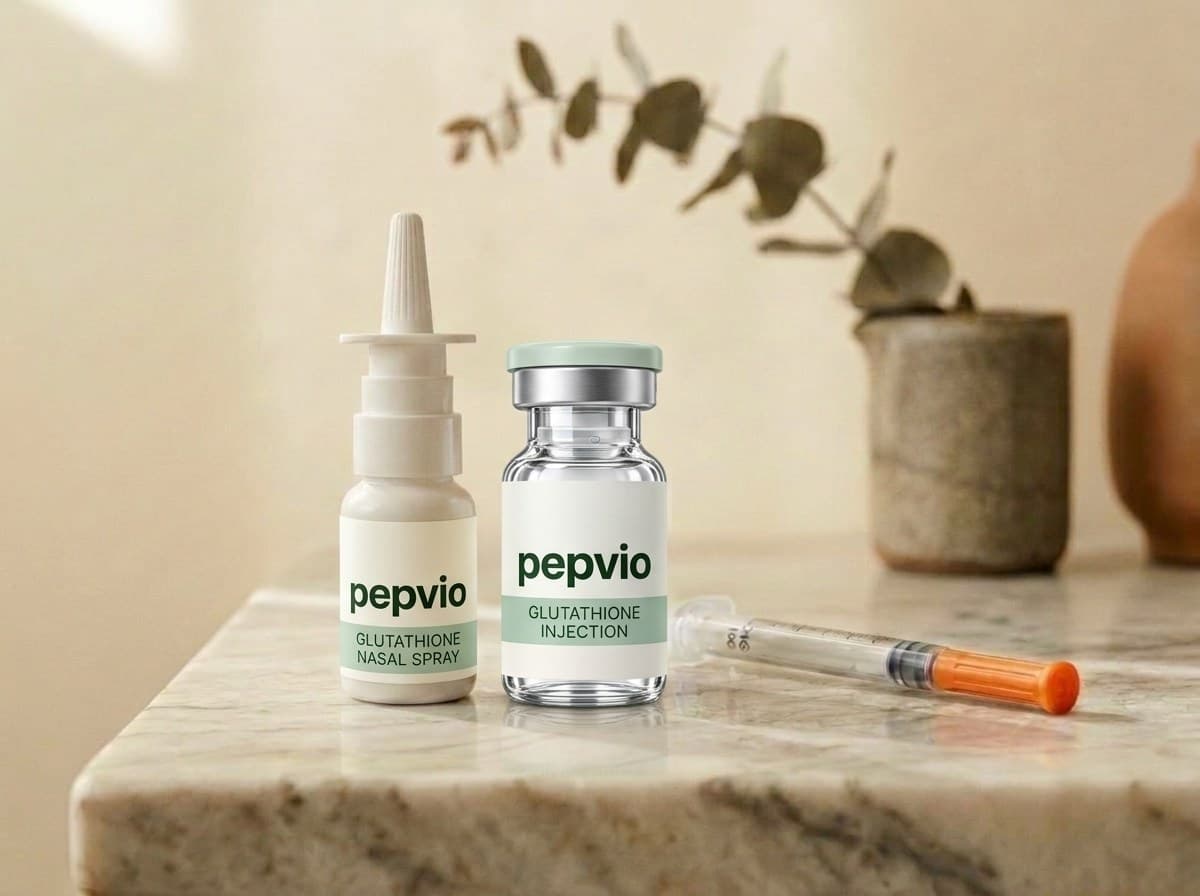
You pick the form at your online visit: a vial and syringe kit, or a nasal spray if you'd rather skip needles. Absorption is lower through the nasal route than subcutaneous, but for needle-averse patients it's a reasonable starting point. The molecule is the same either way; only the delivery changes.
the differences that actually matter
Dose per administration. IV delivers more glutathione at once, directly into the bloodstream. Subcutaneous absorbs well but at a lower peak dose per injection. For the goals most people have, consistent weekly dosing at a moderate dose tends to produce better outcomes than occasional high-dose infusions.
Frequency. A clinic-based IV requires scheduling. Most people fit in one every few weeks. At-home subcutaneous fits into a weekly or twice-weekly routine without any scheduling friction.
Cost. IV glutathione through a clinic typically runs considerably more per session than a monthly at-home subscription, particularly when you factor in IV clinic overhead and additional service fees. For current pricing on the at-home protocol, the glutathione protocol page has the details. For most people, the subscription cost works out to less per year of regular use than intermittent clinic visits.
Consistency. This is the real separator. Glutathione levels drop with age, alcohol, chronic stress, and environmental exposures. The goal of a protocol is regular support, not periodic loading. A weekly at-home injection is a better fit for that goal than a monthly clinic visit.
who chooses each
Some people prefer the IV experience, and that's a reasonable preference. If you have a functional medicine clinic you already trust, glutathione IV fits naturally into an existing care relationship. The tactile experience of a drip session has real value for some patients.
For most people starting a glutathione protocol today, at-home subcutaneous makes more practical sense. It fits a regular schedule, the annual cost is lower, and consistency of dosing is what the biology rewards.
If you're also on NAD+ (a natural pairing: NAD+ supports cellular energy production while glutathione handles cellular cleanup), a combined at-home protocol is simpler than two separate clinic relationships. The Longevity Bundle covers both in one subscription.
For more on what the injection form actually does, see glutathione injection benefits: what the research shows.
bottom line
IV glutathione and at-home subcutaneous glutathione are the same molecule in different packaging. The IV gives you a higher one-time dose at a clinic; the at-home form gives you regular weekly dosing without the clinic visit and at a lower annual cost.
For most people, the case for a consistent at-home protocol is straightforward. If you're curious about starting, the glutathione protocol page covers what's prescribed, how the online visit works, and current pricing. The visit takes about 2 minutes and a physician reviews it before anything ships.
Frequently asked questions
Is IV glutathione better than subcutaneous injections?
Not clearly. IV delivers a higher single dose directly into the bloodstream, and clinics have used it for decades. At-home subcutaneous injections absorb well and let you dose weekly instead of sporadically. For most people, consistent weekly dosing at home is more practical and tends to cost less annually.
How often do you take subcutaneous glutathione at home?
Usually once or twice a week, depending on the schedule your prescriber sets at your online visit. The goal is regular, consistent support rather than occasional high-dose infusions. Your exact protocol is set based on your situation.
Can I switch from IV glutathione to at-home injections?
Yes. The molecule is the same; you're changing the delivery method. An online visit takes about 2 minutes. You pick the form you want (injection or nasal spray) at the visit, and your prescriber sets the dose and schedule.
What does glutathione actually do in the body?
Glutathione is the body's primary antioxidant, produced in the liver and used throughout your cells to manage oxidative stress and support detoxification. Levels drop with age, alcohol use, chronic stress, and certain medications. A compounded protocol helps maintain consistent levels.
Does glutathione have side effects?
Glutathione is generally well tolerated. The most common issue with subcutaneous injections is mild irritation at the injection site. Patients with sulfa allergies should check with their prescriber before starting, as some compounded formulations contain sulfur compounds.
This article is for general information and is not medical advice. Pepvio treatments are prescription medications: a licensed US physician reviews every intake and prescribes only when clinically appropriate. Individual results vary.
Ready to get started?
A short intake form, reviewed by a licensed U.S. physician. You're only charged if a prescription is written.
See if glutathione is right for meKeep reading
What Glutathione Does, and Why the Injection Form Matters
Glutathione is the body's primary antioxidant, made inside every cell, essential for immunity, detox, and cellular energy. Oral supplements mostly don't survive digestion. The injectable form does. Here's what it actually does and how to get it through a licensed physician.
Read articleNAD+ and Perimenopause: Why You're Still Tired After HRT
Perimenopause is a hormonal shift. But the fatigue that comes with it has a second cause: NAD+, the molecule your cells use to make energy, drops faster in your 40s because estrogen helps keep it running. Here's how the two declines feed each other, and why some women add NAD+ to their HRT.
Read articleNAD+ Injections: What They Are, What to Expect, and How the Protocol Works
NAD+ injections are subcutaneous, not IV, and most people take them at home several times a week. Here is what the injection involves, what people tend to notice, and how the protocol is structured.
Read article