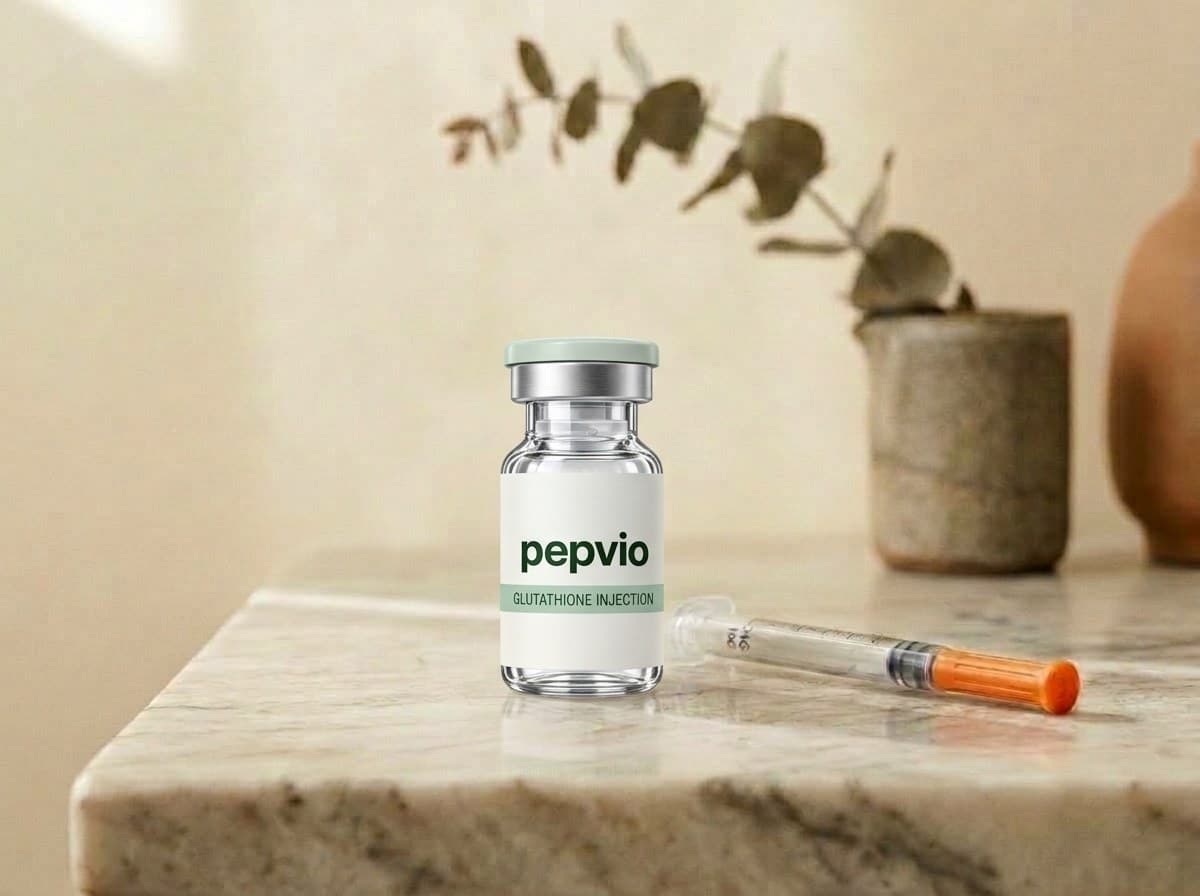
what glutathione is
Glutathione is a small molecule your body makes from three amino acids (glycine, cysteine, and glutamate) and it's present in every cell. It's often called the master antioxidant because it's the one that keeps all the others running. It regenerates vitamins C and E after they've been used up neutralizing free radicals. Without enough glutathione, those antioxidants can't cycle back into action.
Your glutathione level matters more than most people realize, and it drops off with age, illness, stress, poor sleep, alcohol, and certain medications. It usually fades gradually rather than crashing, which is exactly why it's easy to miss.
This is also why supplementing orally is harder than it sounds.
why oral glutathione mostly doesn't work
When you swallow glutathione, enzymes in the GI tract break it apart into its component amino acids before it can be absorbed as the intact molecule. You absorb the parts, not the whole. Your cells can use those parts to build new glutathione (in theory) but the dose that arrives is a fraction of what was in the capsule, and the conversion depends on how much raw material (especially cysteine) your body has on hand.
N-acetyl cysteine (NAC), the precursor supplement, fares better. It survives digestion and raises intracellular cysteine, which does support glutathione production. It's a reasonable OTC option. But the ceiling is lower than injectable glutathione, which delivers the intact molecule directly into the bloodstream.
Subcutaneous injection, the same delivery method used for other prescription peptides, bypasses the digestive problem entirely. The molecule arrives intact at the tissue level.
what glutathione does in the body
Antioxidant protection. The primary job. Glutathione neutralizes reactive oxygen species, the byproducts of normal metabolism that damage cell membranes, proteins, and DNA when they accumulate faster than the body can clear them. It's the front line of that clearance.
Immune function. Natural killer cells and T-cells depend heavily on glutathione for their own function. When glutathione is low, immune cells are less effective. They can still mount a response, but with less precision and less vigor. This is part of why illness itself depletes glutathione: the immune response burns through it.
Liver detoxification. The glutathione-S-transferase enzyme system in the liver uses glutathione to bind to toxins (pesticides, heavy metals, drugs, metabolic waste) packaging them for excretion. It's one of the liver's main detox pathways.
Supporting other antioxidants. Vitamins C and E become pro-oxidants once they've neutralized a free radical. They need glutathione to regenerate them. Same with the enzyme thioredoxin and the cofactor NADPH. Glutathione sits at the center of that whole network.
What people commonly report after several weeks on injectable glutathione: more consistent energy, a sense of better recovery after exertion or illness, and sometimes a mild improvement in skin quality (the skin-brightening effect is documented and real, though it's a side effect rather than the point for most people using it clinically).
who it tends to fit
Injectable glutathione tends to interest adults who:
- Are focused on longevity and cellular health alongside other protocols
- Want immune support that goes beyond a vitamin supplement
- Are recovering from illness or a period of high oxidative stress
- Have noticed declining energy or recovery that doesn't resolve with sleep alone
It isn't a universal fix. A licensed provider evaluates whether glutathione is the right fit or whether something else (thyroid, hormones, iron, sleep) deserves attention first. That evaluation is part of what going through a physician gets you: not just a prescription, but a look at the full picture.
Glutathione pairs commonly with other longevity-focused protocols like NAD+, since the two systems support each other at the cellular level. NAD drives the energy production that glutathione helps protect.
how it's prescribed
Glutathione is prescribed through an online visit: an intake, a review by a licensed U.S. physician, and, if it's appropriate for you, a licensed U.S. pharmacy compounds and ships it to your door with your name on the label and instructions inside.
The at-home form is subcutaneous injection, typically once or twice a week. If you're already a Pepvio patient and want the plain-English version of how to read your dosing instructions, that's covered in detail in the glutathione dosing guide.
For current pricing, the Glutathione protocol page has everything: what arrives, what the visit includes, and how it works.
the bottom line
Glutathione is a molecule your body already makes and leans on every day, and the injectable form is the reliable way to top it back up when depletion is the problem.
If you're curious whether injectable glutathione is a fit for where you are right now, the Glutathione protocol page covers the details and the online visit.
Frequently asked questions
Why doesn't oral glutathione work as well as the injection?
Oral glutathione is broken down in the digestive tract before it can be absorbed as the intact molecule. The injectable form delivers it directly into the bloodstream, bypassing the gut entirely.
How is injectable glutathione different from IV glutathione?
IV glutathione is administered at a clinic via IV line: higher dose, faster delivery, clinic visit required. Subcutaneous injectable glutathione is the at-home prescription path: a small needle under the skin, typically once or twice a week, no clinic needed.
How often do I take it, and how long until I notice something?
Most prescriptions are once or twice a week. Most people who notice an effect see it over several weeks: consistent energy and recovery rather than a sudden change. Individual response varies.
Does glutathione interact with other medications or protocols?
Glutathione is generally well-tolerated and has a low interaction profile. A provider reviews your medication list as part of the intake process, which is the safest approach regardless.
Can I take glutathione alongside NAD+ or other longevity protocols?
The two systems are complementary: NAD drives energy production and glutathione protects the cells that use it. Many people take both. Your provider can look at your full picture and advise.
This article is for general information and is not medical advice. Pepvio treatments are prescription medications: a licensed US physician reviews every intake and prescribes only when clinically appropriate. Individual results vary.
Ready to get started?
A short intake form, reviewed by a licensed U.S. physician. You're only charged if a prescription is written.
See if I qualifyKeep reading
Why Am I Gaining Weight After 40? The Five Causes and What Helps
Weight that climbs on the same habits after 40 usually has five causes stacking at once: lost muscle, less daily movement, lighter sleep, hormone shifts, and stress. Age itself changes resting metabolism very little. Here is what each cause looks like, what a doctor should rule out, and what helps.
Read articleWhat Happens to Your Body After 40: The Six Changes People Notice and Why
Sleep, energy, recovery, focus, weight, and desire all shift after 40, and they tend to shift together because four systems in the body change at the same time. Here is what's behind each one, and how to tell a normal change from one worth a closer look.
Read articleWhy Do I Keep Waking Up at 3 AM? The Common Causes After 40 and What Helps
Regular 3 AM waking after 40 usually comes down to lighter second-half sleep, an early cortisol rise, alcohol, blood sugar, stress, hormones, or a full bladder. Here is how to work out the cause, what helps, and when it's worth seeing a doctor.
Read article