In this article
- 01the short answer
- 02what a peptide is
- 03sermorelin: the sleep and recovery signal
- 04PT-141: the desire signal
- 05semaglutide and tirzepatide: the appetite signals
- 06not peptides, but often grouped with them
- 07prescription, compounded, and what is sold online
- 08how peptide medications are taken
- 09Frequently asked questions
the short answer
A peptide is a short chain of amino acids, usually between 2 and 50, that the body uses as a signal between cells. Your body makes thousands of them. A handful are prescription medications: sermorelin, PT-141, and the GLP-1 medications semaglutide and tirzepatide. Each copies a signal the body already makes.
The word covers a lot of ground, which is why it causes confusion. Insulin is a peptide. So is oxytocin. So are the compounds sold on bodybuilding forums with no prescription and no pharmacy behind them. The chemistry is the same family; the evidence, the legal status, and the safety are not.
This article covers what a peptide is, the three peptide medications a physician can prescribe through Pepvio and what each one does, the products people often lump in with peptides that are something else, and what "compounded" means when you see it on a prescription.
what a peptide is
Proteins are long chains of amino acids, often hundreds of them, folded into machines that do physical work in the cell. Peptides are the short chains. Oxytocin is nine amino acids long. GLP-1, the gut hormone that tells your brain you have eaten, is about 30. Growth-hormone-releasing hormone, the signal your brain sends to your pituitary gland, is 44.
Most peptides work as messengers. A peptide is released by one cell, travels to another, and fits into a receptor on that cell's surface the way a key fits a lock. The receptor then tells the cell what to do: release a hormone, change how much energy it burns, send a signal onward to the brain. Because each peptide fits a specific receptor, the effect is specific too.
Peptides are also short-lived. Digestive enzymes break them down the same way they break down the protein in a meal, which is why almost no peptide medication comes as a pill. The prescribed ones are given as a small injection under the skin or, for some, as a nasal spray, so the peptide reaches the bloodstream intact. That is also why a "peptide supplement" swallowed as a capsule delivers amino acids, not a working signal.
A peptide medication is a lab-made copy of one of these signals, sometimes with a small change to make it last longer in the body. Insulin has been made this way since the 1980s. The peptides below are the same idea applied to sleep, desire, and appetite.
sermorelin: the sleep and recovery signal
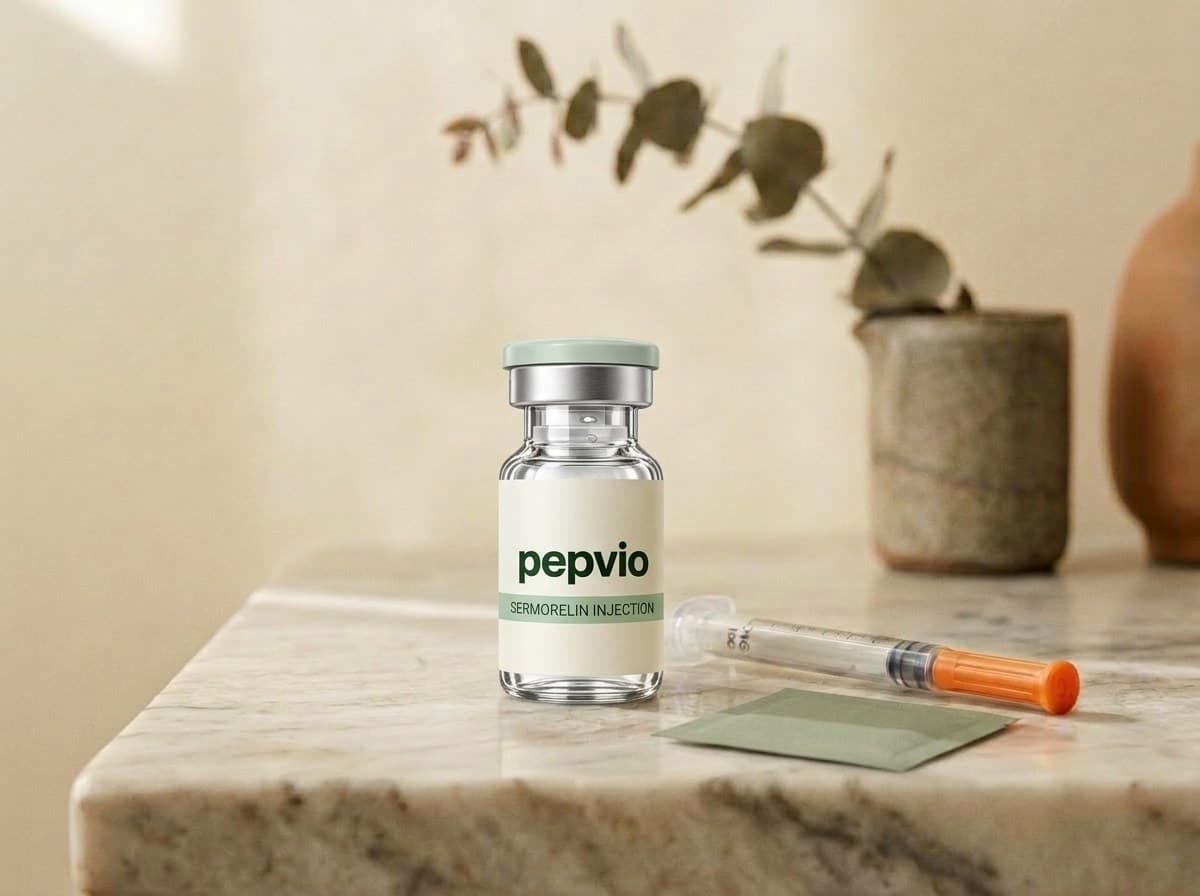
Sermorelin is a copy of the first 29 amino acids of growth-hormone-releasing hormone, the piece that carries the message. Your pituitary gland releases growth hormone in pulses, mostly during deep sleep in the first hours of the night, and that release drives much of the body's overnight repair. With age, the brain sends the signal less often and the pulses shrink. The gland itself still works.
Sermorelin gives the gland the signal again. Taken as a nightly injection before bed, it prompts the pituitary to release your own growth hormone in its normal pulses, with your body's feedback system still deciding how much. That is the difference from injecting growth hormone directly, which overrides that feedback. In a 1992 trial in men over 60, a short daily course brought growth hormone and IGF-1 levels back to the young-adult range within two weeks.[1] Doctors have prescribed it since the 1990s.[2]
What people notice first is deeper sleep, usually within the first few weeks, and then recovery from workouts and long days over the following two to three months. What is sermorelin covers the mechanism and timeline in detail; why sleep and recovery decline with age covers the problem it addresses.
PT-141: the desire signal
PT-141 (bremelanotide) is a seven-amino-acid peptide that works on the brain's melanocortin receptors, part of the circuit involved in sexual desire. It does not act on blood flow. That is the difference from the blood-flow pills, which help the body respond but do nothing for wanting to.
It is taken as needed, about 45 minutes before intimacy, as a small injection or a nasal spray, because the effect follows the dose. In two Phase 3 trials of about 1,200 premenopausal women with low desire, it improved desire and reduced the distress that comes with losing it, compared with placebo.[3] The FDA approved it in 2019 under the brand name Vyleesi. Nausea is the most common side effect, most often with the first doses.
Pepvio prescribes it for women and for men. PT-141 for female desire and PT-141 for men cover how it is used and what to expect.
semaglutide and tirzepatide: the appetite signals
The GLP-1 weight-loss medications are peptides too, which surprises people. Semaglutide, the same molecule as Ozempic® and Wegovy®, is a modified copy of GLP-1, the hormone your gut releases after a meal to tell your brain you are full and to slow the stomach's emptying. Tirzepatide, the same molecule as Mounjaro® and Zepbound®, copies GLP-1 and a second gut hormone, GIP. Both are altered so they last about a week in the body instead of minutes, which is why they are a once-weekly injection.
The effect is on appetite, not metabolic rate: hunger is lower, fullness arrives sooner, and the background thought about food quiets down for most people who take them. In the trial that led to semaglutide's approval for weight, adults lost an average of about 15 percent of body weight over 68 weeks against about 2 percent on placebo.[4] In the equivalent tirzepatide trial, the highest dose produced an average loss of about 21 percent over 72 weeks.[5]
Pepvio prescribes both as compounded medications. The GLP-1 protocol page has the current details, and how to increase your metabolism after 40 covers where medication fits alongside muscle and protein.
not peptides, but often grouped with them
Several Pepvio protocols get called peptides and are not. It matters, because they work differently and the questions to ask about them are different.
NAD+ is a coenzyme, the molecule every cell uses to turn food into usable energy. It is not a signal between cells. Levels fall with age, and prescription NAD+ raises the supply directly, as a small injection several times a week or a nasal spray. What NAD+ injections involve covers it.
Glutathione is technically a peptide, three amino acids long, but it does not act as a messenger. It is the body's main antioxidant, the molecule cells use to neutralize the byproducts of energy production and detoxification. It is grouped with peptides by chemistry, not by function.
Methylene blue is not a peptide at all. It is a small synthetic compound with over a century of medical use that supports how mitochondria produce energy, taken as a low daily dose for focus.
Hormone therapy (HRT) uses estrogen and progesterone, which are steroid hormones. They are built from cholesterol, not amino acids, and they act inside the cell rather than at the surface. Sermorelin is sometimes mistaken for a steroid because it involves growth hormone; it is a peptide, and it does not add growth hormone to the body.
prescription, compounded, and what is sold online
Every peptide above is a prescription medication. A physician decides whether it fits your health history, sets the dose, and follows up. Through Pepvio, that starts with an online visit that takes about 2 minutes, reviewed by a licensed U.S. physician, and you are charged only after the physician approves.
"Compounded" means the medication is made to that prescription by a licensed U.S. compounding pharmacy rather than sold as a brand-name product. Compounding is regulated: the pharmacy is licensed by its state, the ingredients come from FDA-registered suppliers, and the FDA maintains lists of which substances pharmacies may compound. Pepvio prescribes only what a licensed U.S. pharmacy can legally make and ship.
That is what separates the peptides in this article from the ones sold online "for research." Those products are not prescribed, not made in a licensed pharmacy, and not tested for purity or dose before they reach you, and many of them cannot legally be compounded for human use at all. Are peptides legal in 2026 explains the rules, and where to buy peptides legally explains what a legitimate source looks like.
how peptide medications are taken
Sermorelin and the GLP-1 medications are subcutaneous injections: a small insulin-style needle into the fat just under the skin of the abdomen or thigh. Most people describe the first one as the hardest part and the rest as routine. Sermorelin is nightly; semaglutide and tirzepatide are once a week. PT-141 is an injection or a nasal spray, used as needed. You choose the form at your online visit where more than one exists, and the physician sets the dose.
Each one has side effects specific to it, which the physician reviews with you: mild redness at the injection site with sermorelin, nausea with PT-141 and with the GLP-1 medications, especially early and at higher doses. None of them is appropriate during pregnancy, and each has health conditions that rule it out, which is what the intake questions are for.
If you already know what you are noticing (sleep, desire, weight) the protocol pages above are the place to start. If you are not sure, the quiz matches what you are noticing to a starting point.
---
Sources & references
- [1]Corpas E, Harman SM, Piñeyro MA, Roberson R, Blackman MR. "Growth hormone (GH)-releasing hormone-(1-29) twice daily reverses the decreased GH and insulin-like growth factor-I levels in old men." J Clin Endocrinol Metab. 1992;75(2):530-535. PubMed ↩
- [2]Prakash A, Goa KL. "Sermorelin: a review of its use in the diagnosis and treatment of children with idiopathic growth hormone deficiency." BioDrugs. 1999;12(2):139-157. PubMed ↩
- [3]Kingsberg SA, Clayton AH, Portman D, et al. "Bremelanotide for the Treatment of Hypoactive Sexual Desire Disorder: Two Randomized Phase 3 Trials." Obstet Gynecol. 2019;134(5):899-908. PubMed ↩
- [4]Wilding JPH, Batterham RL, Calanna S, et al. "Once-Weekly Semaglutide in Adults with Overweight or Obesity." N Engl J Med. 2021;384(11):989-1002. PubMed ↩
- [5]Jastreboff AM, Aronne LJ, Ahmad NN, et al. "Tirzepatide Once Weekly for the Treatment of Obesity." N Engl J Med. 2022;387(3):205-216. PubMed ↩
Frequently asked questions
What are peptides in simple terms?
Short chains of amino acids, usually 2 to 50, that the body uses as signals between cells. Proteins are the long chains that do physical work; peptides are the short ones that carry messages. Your body makes thousands of them, including oxytocin, the gut hormone GLP-1, and the signal that tells your pituitary to release growth hormone. Peptide medications are lab-made copies of specific signals.
Are peptides the same as steroids?
No. Steroids such as testosterone and estrogen are built from cholesterol and act inside cells. Peptides are built from amino acids and act at receptors on the cell surface. Sermorelin is sometimes confused with a steroid because it involves growth hormone, but it is a peptide that prompts your own pituitary to release growth hormone in normal pulses; it does not add any hormone to the body.
Do you need a prescription for peptides?
For any peptide used as a medication, yes. Sermorelin, PT-141, semaglutide, and tirzepatide are all prescription-only in the U.S. and are made for each prescription by a licensed compounding pharmacy. Products sold online without a prescription, often labeled for research, are not made in a licensed pharmacy and are not tested for purity or dose before they reach you.
Is semaglutide a peptide?
Yes. Semaglutide is a modified copy of GLP-1, a 30-amino-acid gut hormone that signals fullness, altered so it lasts about a week in the body. Tirzepatide is also a peptide; it copies GLP-1 and a second gut hormone, GIP. Both are once-weekly injections that lower appetite rather than raising metabolic rate.
Is NAD+ a peptide?
No. NAD+ is a coenzyme, the molecule every cell uses to turn food into energy, and it does not carry signals between cells. It is often grouped with peptides because it is prescribed the same way, as a compounded injection or nasal spray, and because it is used for a related goal: the energy decline that comes with age.
This article is for general information and is not medical advice. Pepvio treatments are prescription medications: a licensed US physician reviews every intake and prescribes only when clinically appropriate. Individual results vary.
Ready to explore peptide therapy and hormone optimization?
Take our 2-minute health assessment to see which Pepvio protocol fits your goals. A licensed provider reviews every response.
Find My ProtocolKeep reading
Compounded Semaglutide and Tirzepatide: What They Are, How They're Made, and Whether They're Safe
Compounded semaglutide and tirzepatide are the same molecules as the brand-name GLP-1 medications, made by a licensed pharmacy for an individual prescription. Here is what compounded means, how the vial differs from the pen, why it is not a generic, and how to tell a licensed source from a risky one.
Read articleDo Peptides Actually Work?
Short answer: yes, for the right person and the right protocol. The harder question is which one would actually help you. Here's a plain-English walk-through of what each of our protocols does, who it's for, and what's reasonable to expect.
Read articleWhat Is a GLP-1? How These Medications Work, in Plain Language
GLP-1 is a hormone your gut releases after a meal to tell your brain you are full. The medications called GLP-1s, semaglutide and tirzepatide, are longer-lasting copies of it, taken once a week to lower appetite. Here is what the hormone does, how the medications differ from it, what the trials showed, and what taking one involves.
Read article