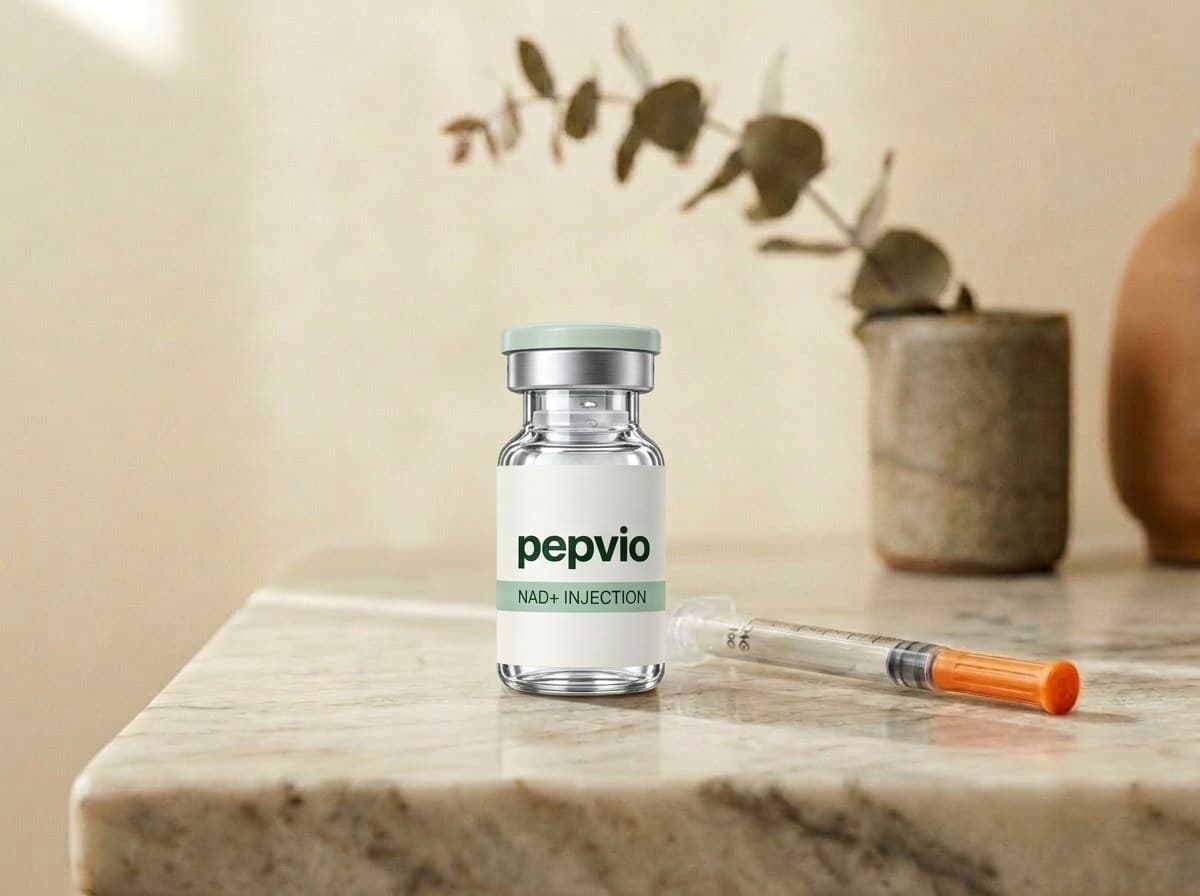
the fatigue that sleep does not fix
There is a specific kind of tired that does not respond to more sleep. You get seven or eight hours, wake up flat, power through on caffeine, and repeat. It is not insomnia. It does not match what you would call burnout. But it is there, and it tends to get more reliable with age.
For many people in their 40s and 50s, NAD+ depletion is part of the explanation.
what NAD+ does in the cell
NAD+ is present in every cell in your body. Mitochondria, the structures that produce the energy your cells run on, use it as a starting material in the process that converts food into ATP, the molecule cells run on. When NAD+ is plentiful, that process runs efficiently. When it falls, it slows.
NAD+ also activates proteins involved in cellular repair and stress response. So it is doing two things at once: running the energy machinery and supporting cellular maintenance.
The downstream effect of low NAD+ is exactly the kind of flat, unrestorative fatigue that is hard to explain to anyone who has not experienced it.
why it falls
NAD+ levels drop roughly 50% between your 20s and 50s. The decline is gradual and not caused by anything specific you are doing wrong. The processes that consume NAD+ (repair, stress response, energy metabolism) eventually outpace what the body replenishes on its own.
Certain things accelerate it: chronic stress, alcohol, poor sleep, illness, and high inflammation. But even without those, the trajectory is downward.
This is why interventions that worked for energy at 35 feel less effective at 48. The base level has shifted.
why oral supplements often fall short
NMN and NR are precursors: the body has to convert them into NAD+. How much actually raises NAD+ varies considerably from person to person, and the conversion depends on cellular machinery that also declines with age.
Oral NAD+ has a different problem: swallowed, it breaks down in the digestive tract before it can enter cells.
Subcutaneous injection bypasses both issues. The molecule is delivered directly into tissue and from there into the bloodstream intact. The NMN vs. NAD+ injection comparison covers the bioavailability difference in detail for anyone who wants the specifics.
who tends to notice it
People who do well on NAD+ injections tend to share a few things: they are in their 40s or 50s, they sleep adequately but wake unrefreshed, their exercise recovery is slower than it used to be, and mental clarity has a ceiling that more coffee no longer lifts.
The effect is usually described as a cleaner baseline, not a stimulant effect. Energy that feels more like what you remember, rather than something added on top.
The NAD+ injections guide covers what the first few weeks typically look like in more detail.
how the prescription works
A licensed U.S. physician reviews a short online intake (about 2 minutes) and prescribes based on your history and goals. A licensed U.S. pharmacy compounds and ships the medication to your door. You are charged only after the provider approves.
Injections are subcutaneous, taken at home, several times a week at a low starting dose. Your provider titrates up based on how you respond. Spacing the dose across several days is gentler on the system and more effective than one large weekly dose.
For the mechanics of how to read a NAD+ prescription, the dosing instructions guide walks through what the numbers mean.
the bottom line
If your fatigue is persistent and not explained by sleep or stress alone, cellular energy production is worth looking at. NAD+ injection is a prescription approach with a clean mechanism and a straightforward path in: a short online intake, a physician's review, and a licensed pharmacy shipping to your door. Pricing and protocol details are on the NAD+ longevity page, and if you are ready to see whether you qualify, the intake is below.
Frequently asked questions
How does NAD+ improve energy?
Cells run on ATP, and NAD+ is a key molecule in the process that makes it. When NAD+ falls, energy production slows. Restoring it helps that process run more efficiently.
Is subcutaneous NAD+ better than IV infusions?
For most people, subcutaneous is more practical and gentler. IV doses hit the system fast and can cause a flush or nausea; subcutaneous releases more gradually. The NAD+ injections guide covers the tradeoff.
How often are NAD+ injections taken?
Several times a week, on the schedule your provider sets. Starting with a low dose and building gradually means fewer side effects and a better sense of how you respond.
How long until I notice a difference?
Most people notice something within 2-4 weeks of consistent use. The clearest improvements tend to come by month 2 or 3.
Do I need a prescription?
Yes. A licensed U.S. physician reviews you online and writes the prescription; a licensed U.S. pharmacy compounds and ships it.
This article is for general information and is not medical advice. Pepvio treatments are prescription medications: a licensed US physician reviews every intake and prescribes only when clinically appropriate. Individual results vary.
Ready to get started?
A short intake form, reviewed by a licensed U.S. physician. You're only charged if a prescription is written.
See if I qualify for NAD+Keep reading
NAD+ Injections vs Oral NMN: Bioavailability, Cost, and Why Biohackers Picked a Side
NAD+ precursors come in several forms (injectable NAD+, oral NMN, oral NR, and IV) and the bioavailability debate between them is one of the more technical arguments in the longevity space. Here's what the published research on tissue-level NAD+ actually shows, how the cost structures compare, and why most informed biohackers have converged on a specific answer.
Read articleQuercetin, Fisetin, and the Senolytic Category: What's Real and What's Hype
Senolytics (compounds that selectively kill senescent cells) are one of the most interesting emerging categories in aging biology. The research is genuinely exciting, the consumer marketing has gotten ahead of the science, and the line between 'promising biology' and 'evidence-based intervention' is especially blurry here. A careful read of the category.
Read articleNAD+ Subcutaneous Without the Chest-Pressure Feeling: A Titration Guide
You did your first 100mg NAD+ injection, felt the wave of chest pressure and anxiety that nobody warned you about, and you're trying to figure out whether you can salvage the protocol. Yes, here's the titration approach that gets you past the first-dose problem.
Read article