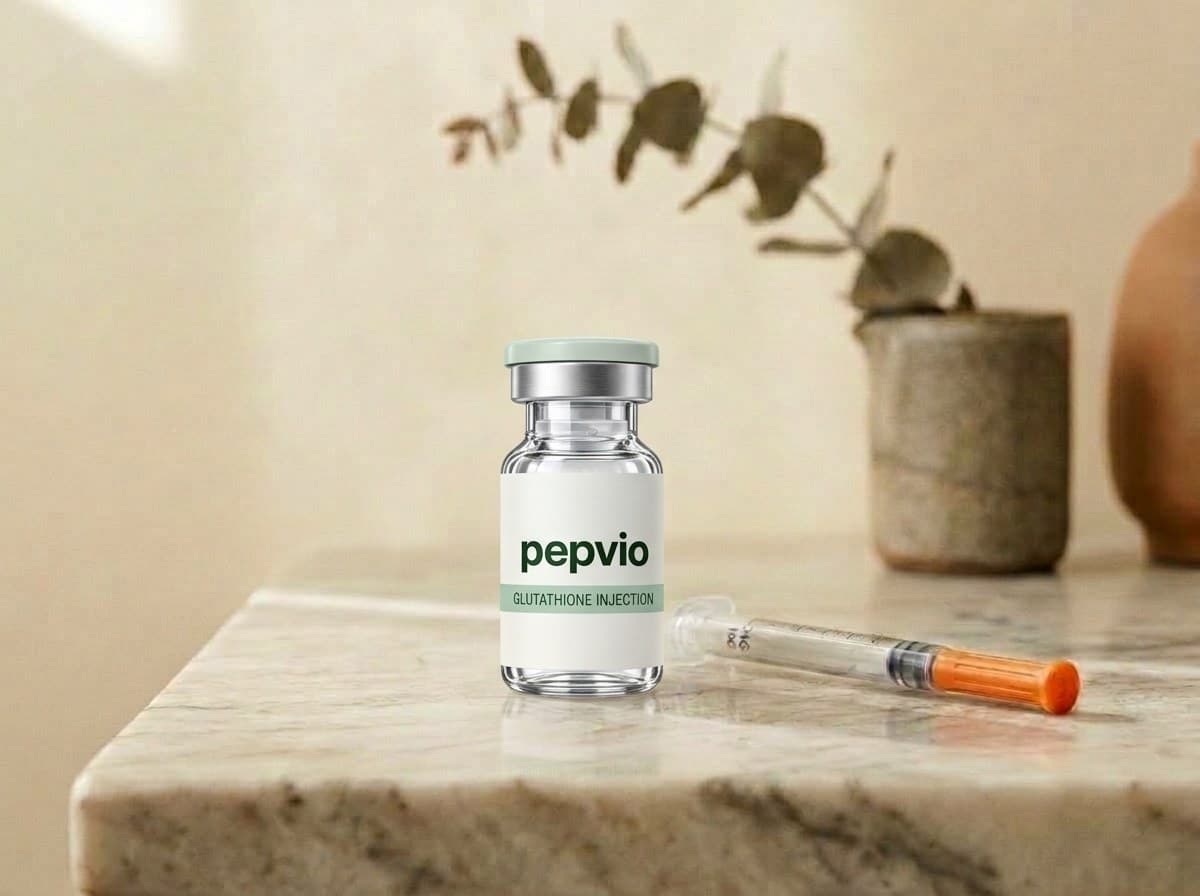
what glutathione is and what it does
Glutathione is a molecule your body makes in every cell, and it's your primary antioxidant defense. Levels decline substantially with age, by some measures roughly in half between early adulthood and the 60s. That decline shows up as reduced cellular resilience, slower recovery, and diminished capacity to clear the daily oxidative load.
The body synthesizes glutathione from three amino acids: glycine, cysteine, and glutamate. Every cell makes it, but production slows as the enzymes involved become less efficient with age. The result is a gap between the oxidative stress cells accumulate and the antioxidant capacity available to manage it.
Glutathione does three main jobs:
- Antioxidant defense. It neutralizes reactive oxygen species, the byproducts of normal metabolism that damage cells when they accumulate.
- Liver detoxification. The liver uses glutathione as a cofactor in one of its primary detox pathways, converting fat-soluble toxins into water-soluble forms the body can excrete.
- Immune support. Immune cells depend on glutathione for normal function; low levels are associated with reduced immune resilience.
how much levels fall and why
The decline in glutathione with age is well documented. A study in the American Journal of Clinical Nutrition found that healthy older adults had markedly lower glutathione concentrations and lower synthesis rates than younger adults, with deficient synthesis rather than excessive breakdown as the cause. In that trial, supplying the missing precursors raised glutathione concentrations by about 95%. A later randomized clinical trial found that 24 weeks of the same precursor approach corrected glutathione deficiency, oxidative stress, and mitochondrial dysfunction in older adults.
The decline isn't linear or sudden. It builds through middle age, and most people don't notice it as a discrete event. What they notice instead are the downstream effects: slower recovery after illness or exertion, more fatigue with effort, and a general sense that the body handles stress less cleanly than it used to.
Several factors accelerate the decline beyond normal aging:
- Chronic alcohol use. Alcohol metabolism depletes glutathione in the liver, the organ that needs it most.
- Chronic stress. Sustained cortisol exposure depletes antioxidant reserves.
- Toxin exposure. Heavy metals, environmental pollutants, and some medications consume glutathione as the body clears them.
- Illness. Serious illness, including major infections, is associated with sharp temporary drops in glutathione.
why oral glutathione supplements often underdeliver
Oral glutathione supplements are widely sold, but the bioavailability problem is real. The gastrointestinal tract breaks glutathione down into its component amino acids before it reaches circulation, so much of what you swallow never makes it into cells as the intact molecule.
This is the same barrier that makes oral NAD+ precursors less efficient than injectable NAD+: absorption through the gut degrades the molecule before it can reach tissues where it's needed. More on that comparison: [NAD+ injections vs oral NMN.]
Subcutaneous injection and nasal spray delivery bypass the gastrointestinal barrier, allowing the molecule to reach systemic circulation intact. The result is meaningfully higher plasma levels than equivalent oral doses, which is why injectable and intranasal forms are the routes used in clinical longevity practice.
what supplementing glutathione looks like in practice
Glutathione is prescribed as a subcutaneous injection or nasal spray, with the form and schedule set at your online visit based on your goals and situation. Your provider determines the cadence: typically once or twice weekly for the injection, or on a spray schedule they set for you.
Most people report noticing cleaner energy and faster recovery over several weeks. The research describes improvements in markers of oxidative stress and mitochondrial function with corrected glutathione levels, though individual response varies and your provider adjusts based on how you're doing.
None of this is a dramatic event. Restoring an antioxidant baseline tends to feel like removing friction rather than adding something. The cells work with less interference; recovery from exercise and illness tends to feel smoother over time.
pairing glutathione with NAD+
Many longevity clinicians prescribe glutathione alongside NAD+, often as a combined protocol. The logic is straightforward: NAD+ supports cellular energy production and the machinery that runs DNA repair and maintenance. Glutathione handles cellular cleanup, neutralizing the oxidative byproducts that energy production creates. The two address different parts of the same longevity picture.
The Longevity Bundle covers both at a lower combined cost than the two protocols separately. For people focused primarily on cellular cleanup rather than energy as the entry point, glutathione alone is a sensible starting protocol.
More on each: NAD+ injections: what you're actually getting and glutathione injection benefits.
Frequently asked questions
How much does glutathione decline with age?
Research shows that older adults have significantly lower glutathione levels than younger adults, with some studies measuring roughly a 50% reduction in plasma glutathione by the 60s compared to young adult levels. The decline builds through middle age rather than appearing suddenly.
Why is injectable glutathione more effective than oral supplements?
Oral glutathione is largely broken down in the gastrointestinal tract before reaching circulation, so most of what you take orally never enters cells as the intact molecule. Injectable and nasal spray forms bypass this barrier, reaching systemic circulation intact at meaningfully higher levels than equivalent oral doses.
How long does it take to notice a difference from glutathione supplementation?
Most people report noticing faster recovery and cleaner energy over several weeks. The research describes improvements in oxidative stress markers and mitochondrial function with corrected glutathione levels, though individual response varies. Your provider adjusts the schedule based on how you respond.
Who should consider glutathione supplementation?
Adults in middle age and beyond who are focused on longevity, faster recovery, or liver and immune support are the primary candidates. People with higher-than-average oxidative burden, including those with a history of heavy alcohol use, chronic illness, or high toxin exposure, tend to have lower baseline levels and may see more noticeable results.
This article is for general information and is not medical advice. Pepvio treatments are prescription medications: a licensed US physician reviews every intake and prescribes only when clinically appropriate. Individual results vary.
Ready to get started?
A short intake form, reviewed by a licensed U.S. physician. You're only charged if a prescription is written.
See if glutathione is right for meKeep reading
Why Do I Keep Waking Up at 3 AM? The Common Causes After 40 and What Helps
Regular 3 AM waking after 40 usually comes down to lighter second-half sleep, an early cortisol rise, alcohol, blood sugar, stress, hormones, or a full bladder. Here is how to work out the cause, what helps, and when it's worth seeing a doctor.
Read articleWhy Am I So Tired in My 40s? The Six Causes Worth Checking
Tired most days in your 40s with nothing obviously wrong usually comes down to one of six causes: lighter sleep, falling NAD+, shifting hormones, an undiagnosed medical issue, alcohol and caffeine habits, or chronic stress. Here is what each one looks like and what to do about it.
Read articleThe Afternoon Energy Crash: Why It Gets Worse After 40 and What Actually Helps
Everyone's alertness dips in the early afternoon. After 40, lighter sleep, falling NAD+ levels, and hormone shifts make the dip deeper and harder to shake. Here is what causes the 2 PM slump, what helps today, when to see a doctor, and where NAD+ fits.
Read article