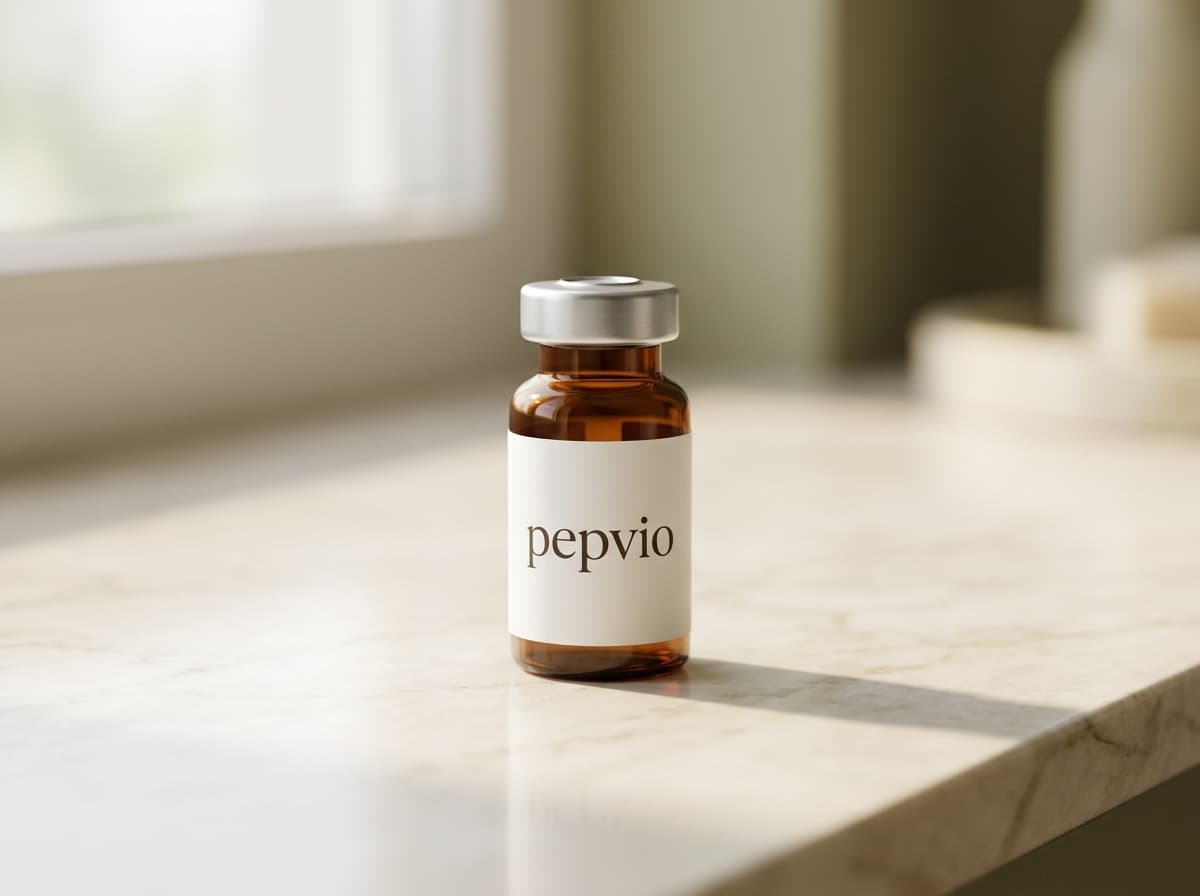
Regulatory status: April 2026
The peptide(s) discussed in this article are currently on the FDA Category 2 bulk drug substances list and cannot be compounded by US pharmacies. Pending formal FDA reclassification to Category 1 (announced February 2026, publication pending), these peptides are not prescribable through Pepvio or any legitimate telehealth platform. Nothing in this article constitutes a recommendation to use these peptides.
first, the regulatory part you have to know
Selank is on the FDA's Category 2 bulk drug substances list, which means US compounding pharmacies can't legally make it. That's been the rule since 2023. The FDA announced in February 2026 that they intend to move it back to Category 1, but as of this writing, the formal paperwork hasn't published. Until then, it isn't legally prescribable through any US telehealth platform or 503A compounding pharmacy. This article isn't a recommendation to use this peptide. The research question is just worth answering honestly.
what selank actually is
Selank is a synthetic peptide developed in Russia in the 1990s at the Institute of Molecular Genetics of the Russian Academy of Sciences. It's a tweaked version of tuftsin (a tiny immune-signaling molecule the body makes naturally) with three extra amino acids tacked on so it doesn't get broken down as fast.
In Russia, Selank has been a prescription medication since 2009, sold under the trade name Selankum. The primary indication is generalized anxiety disorder. It's usually given as an intranasal spray.
Unlike most anti-anxiety medications used in the West (benzodiazepines like Xanax, Ativan, and Klonopin), Selank works through a different mechanism and has a fundamentally different side-effect profile. The research describes it as anxiolytic without sedation, without cognitive impairment, without physical dependence. In some studies, attention and working memory actually improved on Selank rather than degraded.
how it works in the brain
Selank's mechanism is distinct from most anxiolytic medications. Where benzodiazepines work by binding directly to GABA receptors and amplifying the calming effect of GABA (producing the sedation, the muscle relaxation, and the dependence physiology through the same pathway), Selank appears to influence several systems at once without that direct receptor binding:
Serotonin and dopamine modulation. Selank changes how the brain processes serotonin and dopamine, the two neurotransmitters most involved in mood and anxiety. In animal studies, it shifts the balance of their breakdown products in ways that look similar to (but distinct from) what conventional anxiety medications do.
Indirect GABA influence. Unlike Xanax and its cousins, Selank doesn't plug directly into GABA receptors. It seems to nudge the GABA system through knock-on effects further down the line. This is probably why it produces anti-anxiety effects without the sedation and dependence that come from direct GABA agonism.
BDNF expression. Selank boosts BDNF, brain-derived neurotrophic factor, basically Miracle-Gro for brain cells. BDNF is involved in how the brain rewires itself, learns, and remembers. This is part of what may explain the cognitive-enhancement signal in the research.
Immune modulation. Because Selank is built on tuftsin (an immune-signaling molecule), it also influences the immune system. That may contribute to its broader effects on stress response and resilience.
what the research actually shows
Most of the published research on Selank is from Russian institutions. The literature is less accessible to Western clinicians for language reasons, but it's substantial.
Anxiety reduction comparable to benzodiazepines. A 2008 clinical trial compared Selank to medazepam (a benzodiazepine) in patients with generalized anxiety disorder. Both produced significant reductions in anxiety scores. But Selank patients also showed improvements in cognitive function and mood, improvements the medazepam group didn't show. The benzodiazepine group actually experienced cognitive impairment, consistent with what's commonly observed clinically.
No sedation or dependence. Selank doesn't produce sedation, doesn't impair driving or work performance, and doesn't appear to cause physical dependence with chronic use. In animal studies, abrupt discontinuation after long-term Selank administration produced no withdrawal symptoms, a stark contrast to benzodiazepine withdrawal, which can be severe and dangerous.
Cognitive enhancement signal. Several studies have documented improvements in attention, working memory, and learning in subjects taking Selank. This has led to its categorization as a nootropic peptide alongside other cognitive-enhancing peptides like Semax.
Effects on stress response. Selank appears to modulate the body's stress response, reducing the elevation of cortisol and other stress hormones that come with acute and chronic stressors.
selank vs benzodiazepines, practically
Selank isn't FDA-approved for anything, so comparison with benzodiazepines isn't a prescribing recommendation. It's a description of how the two compound classes differ based on the published research.
Onset and duration. Benzodiazepines work within 30-60 minutes and have effects that last several hours. Selank's effects build more gradually with consistent use over days to weeks, though some users report acute mood improvement from individual doses.
Sedation. Benzodiazepines are associated with sedation in the literature. Selank isn't, based on the published research.
Cognitive effects. Benzodiazepines are associated with impaired memory formation and cognitive function. Selank has been associated with improved cognitive function in published research.
Dependence and withdrawal. Benzodiazepines cause physical dependence and withdrawal that can be severe and protracted. Selank has not been associated with dependence in published studies. Long-term data is more limited.
Risk profile. Benzodiazepines have well-documented risks: respiratory depression (especially combined with alcohol or opioids), increased fall risk in older adults, and association with cognitive decline. Selank has a more favorable safety profile based on the available data, though the total volume of research is smaller.
Whether Selank could ever be an alternative, complement, or replacement for any individual patient's current anxiolytic regimen is a clinical decision between the patient and a prescribing physician. Patients currently taking benzodiazepines should never discontinue without physician supervision.
the intranasal route
Selank is unique among the commonly discussed peptides in that it's typically administered as a nasal spray rather than an injection. The reason is practical: Selank is well-absorbed through the nasal mucosa and crosses the blood-brain barrier readily, making intranasal administration both effective and convenient.
Specific dosing, frequency, and administration would be determined by a prescribing provider based on the patient's health history, current medications, and clinical goals. Published research describes a range of approaches, but the protocol for any individual patient is a clinical decision made at intake.
who selank may help
Candidacy for any compounded protocol is assessed by a prescribing physician at intake. Factors the provider evaluates include medical history, current medications, contraindications, bloodwork, and the patient's specific goals.
The published clinical literature on Selank has focused on generalized anxiety, performance-related anxiety, and stress-related cognitive impairment. The non-sedating profile is the most commonly cited reason patients and clinicians discuss it as a possible option. Whether it's appropriate for any individual patient is a clinical determination made by the prescribing physician.
safety and side effects
Based on decades of Russian clinical use and the available research, Selank has an excellent safety profile. The most commonly reported side effects are mild and uncommon: occasional nasal irritation from the spray, rare headaches, and minor sleep disturbances if taken too late in the day.
Unlike benzodiazepines, Selank hasn't been associated with respiratory depression, falls, cognitive impairment, dependence, or withdrawal syndromes. Long-term safety data beyond several years of clinical use is limited (which is true for most peptides), but the available data is reassuring.
As with any peptide therapy, contraindications exist and need to be evaluated by a physician. These typically include active malignancy, pregnancy and nursing, and certain neurological conditions. Patients on other psychiatric medications should discuss interactions with their prescribing physician.
accessing selank legally in 2026
As of mid-2026, Selank is on the FDA Category 2 bulk drug substances list and isn't legally compoundable in the US. The FDA announced intent in February 2026 to reclassify 14 peptides (Selank included) back to Category 1, but formal publication is still pending.
Until that publication occurs, the legitimate path is to wait. Once Category 1 status is formally restored, the pathway will be: medical evaluation, prescription from a licensed physician, and fulfillment by a 503A or 503B compounding pharmacy.
For more on Selank in a specific situational-anxiety use case, see Selank for pre-performance anxiety. For comparison with the related Russian peptide Semax, see Selank vs Semax. For the broader regulatory framework, see are peptides legal in 2026.
This article is for general information and is not medical advice. Pepvio treatments are prescription medications: a licensed US physician reviews every intake and prescribes only when clinically appropriate. Individual results vary.
Ready to explore peptide therapy and hormone optimization?
Take our 2-minute health assessment to see which Pepvio protocol fits your goals. A licensed provider reviews every response.
Find My ProtocolKeep reading
Peptides for Sleep: Why Biohackers Swear CJC-1295/Ipamorelin Changes Everything
Most peptides marketed for sleep miss the actual mechanism. Here's what the research describes about how growth hormone secretagogues like CJC-1295 and Ipamorelin affect sleep architecture, and why deep sleep matters more than total hours.
Read articleBPC-157 for Leaky Gut: What the Research Actually Supports
BPC-157 is the peptide most associated with gut healing in biohacker circles. The rat research is genuinely impressive. The human evidence is much thinner. Here's a careful read of what the published research actually supports, and what it doesn't.
Read articleSermorelin and Body Composition: What the 12-Week Timeline Actually Looks Like
Sermorelin has one of the longest clinical research tracks of any peptide available today, and the published trials are specific about what changes and when. Here's what Sermorelin studies have measured at 6 weeks, 12 weeks, and 6 months (lean mass, fat mass, waist circumference) and how the signal builds over time.
Read article