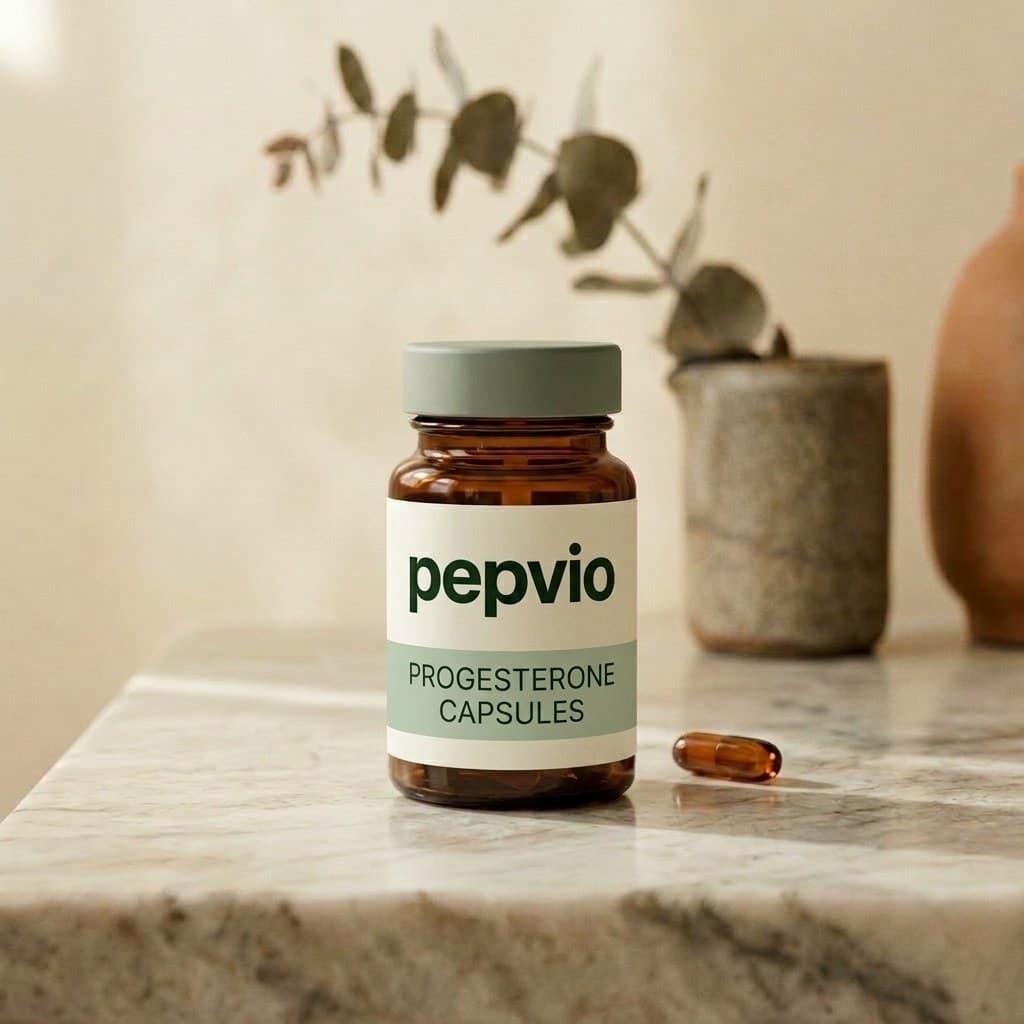
what progesterone does at night
Take progesterone in the evening and your body turns it into a calming compound that quiets the same brain system sleep aids and anti-anxiety meds act on, but at the gentle, natural level your body makes on its own. So it doesn't knock you out; it nudges you toward rest.
In a regular menstrual cycle, progesterone climbs in the two weeks after ovulation, and that calming effect rises with it, your body's built-in evening wind-down. As progesterone falls off in perimenopause and menopause, that nightly signal goes quiet. It's a big reason sleep often gets worse before periods even stop: progesterone tends to be the first hormone to turn erratic, and the calm goes with it.
why bedtime, and not morning
Oral progesterone peaks in your bloodstream about 2–3 hours after you take it. Take it at bedtime and that peak lands right as you're dropping into the deep, early-night sleep that decides how you feel the next day.
Take it in the morning and that same drowsy peak shows up while you're trying to be awake, so it feels like grogginess instead of rest. That's why most providers prescribe it at night. If yours didn't, it's worth raising sleep as a specific goal at your visit.
what to expect
Most women who add progesterone to an estrogen regimen notice deeper sleep within 1–3 weeks, especially in the first half of the night. Some get vivid dreams, which fits how progesterone works and usually settles after a few weeks.
Not everyone responds the same way. Some need a dose tweak; a few do better on a different form for other reasons. The sleep effect comes from the way your gut processes the capsule, so the oral form is usually the one for this.
progesterone in the hrt picture
If you have a uterus and take estrogen, progesterone isn't optional. It protects the uterine lining, which estrogen on its own would overstimulate. The sleep benefit isn't a lucky side effect; it's built into how oral progesterone works.
Plenty of women start HRT for hot flashes or mood and find the better sleep is what they notice most. After years of broken sleep in your 40s, that's often the change that gets your attention. Perimenopause sleep breaks for a few different hormonal reasons. Progesterone's calming effect is one of the most direct.
If you don't have a uterus, you don't need progesterone alongside estrogen, but some providers add it just for the sleep and mood benefit. Worth raising at your visit.
how to get evaluated
The online intake takes about 2 minutes and is reviewed by a licensed U.S. physician. If HRT is a fit, a licensed U.S. pharmacy fills your prescription and ships it to your door. The form and dose of both estrogen and progesterone are decided at the visit, not preset.
If sleep is your main concern, say so plainly in your intake. A good provider looks at the whole picture, not just which symptoms are loudest, but how they connect. You can start the intake below, or read about estradiol delivery forms first if you want more context on the full HRT prescription.
Key Takeaway
Frequently asked questions
Does progesterone really help with sleep?
For many women, yes, especially oral progesterone taken at bedtime. Your body turns it into a calming compound that works on the brain's main 'settle down' system, which deepens sleep. Women on HRT who notice they're sleeping better are often feeling this effect from the progesterone specifically.
What's the best time to take progesterone?
At bedtime. The calming, sleep-promoting effect peaks about 2–3 hours after an oral dose, so taking it at night lines that up with the start of sleep. Morning dosing still protects the uterine lining, but it pushes the drowsy effect into your waking hours.
Why does progesterone affect sleep?
Your body converts oral progesterone into a calming compound that quiets the same brain system anti-anxiety and sleep medications act on, but at the natural level your body makes on its own. That's the direct reason it deepens sleep rather than just protecting the uterus.
Is progesterone enough on its own for HRT?
No. Progesterone alone doesn't address what estrogen decline causes: hot flashes, mood changes, vaginal dryness, bone effects. A complete HRT regimen pairs estrogen with progesterone. If you have a uterus, progesterone is required when you take estrogen; if you don't, it's optional but often worth discussing for sleep and mood.
Can progesterone help with anxiety?
Many women report feeling calmer day-to-day after starting oral progesterone. The same calming effect that helps with sleep also takes the edge off the stress response. It's a real, well-documented secondary benefit, though it's not the main reason progesterone is prescribed.
This article is for general information and is not medical advice. Pepvio treatments are prescription medications: a licensed US physician reviews every intake and prescribes only when clinically appropriate. Individual results vary.
Ready to get started?
A short intake form, reviewed by a licensed U.S. physician. You're only charged if a prescription is written.
See if HRT is right for meKeep reading
What's Actually Happening to Your Hormones in Your 40s and 50s
Perimenopause reshapes the entire female endocrine system: estrogen, progesterone, testosterone, DHEA, and SHBG all shift in ways that are well-characterized in the literature. Here's a research-first overview of what the major endocrine bodies say about that biological transition.
Read articleWhy Two Different Doctors Will Tell You Two Different Things About Your Hormones
Two mental models dominate women's hormone prescribing today: the clinical-care model (Midi, Alloy, NAMS-credentialed menopause specialists) and the biohacker-optimization model (functional medicine, longevity clinics, hormone optimization practices). Neither is wrong. They serve different patients with different identities. Here's a clear read on the structural differences.
Read articleWhy Your Doctor Won't Prescribe You Testosterone (And Who Actually Will)
There is no FDA-approved female testosterone product in the US. Here's why: the Intrinsa history, what Europe and Australia do differently, the compounded and off-label workaround that defines US practice, and who actually prescribes in this landscape.
Read article