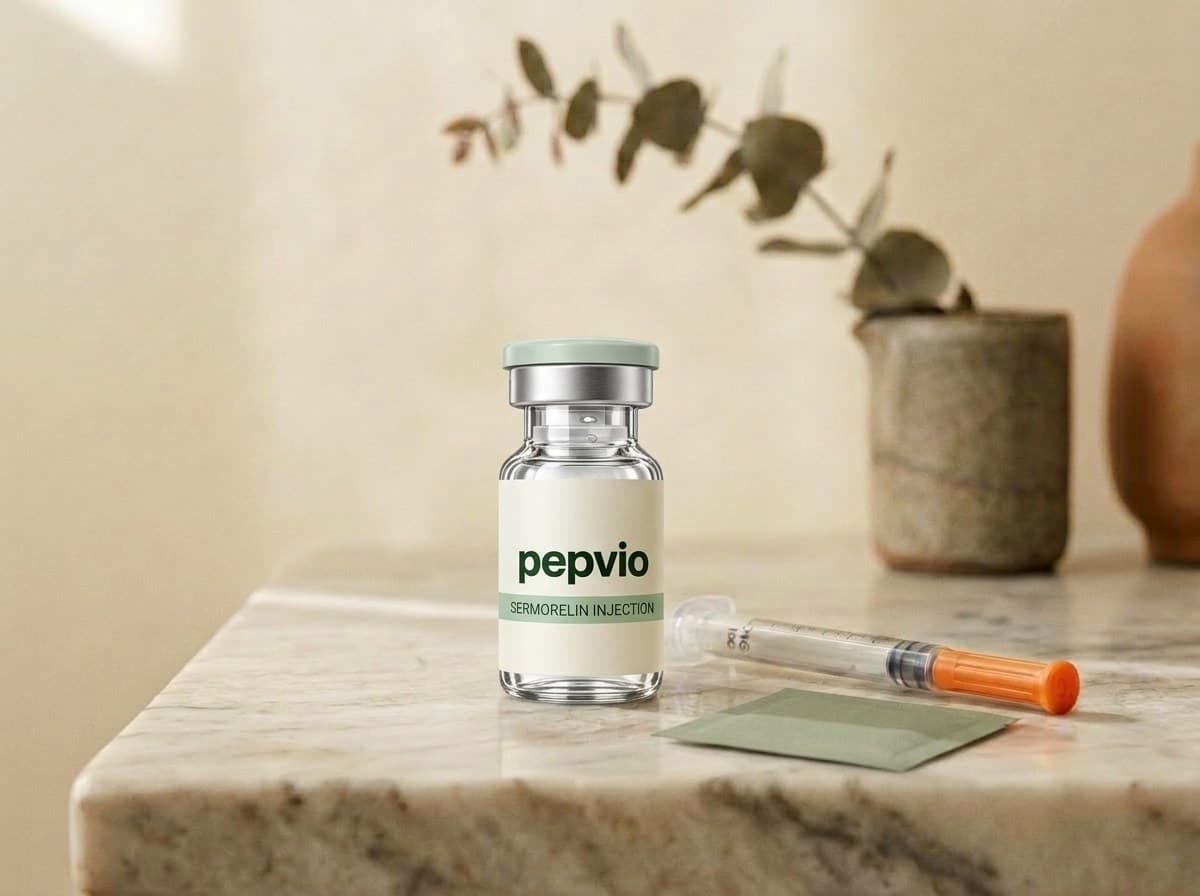
what patients actually notice, and when
Yes, sermorelin works. Most people notice better sleep first, typically in weeks two through four. Energy and workout recovery improve over months two and three. Body composition shifts become visible around months four through six. The changes are cumulative and follow what growth hormone does in the body.
The order is not random. Sermorelin is a nightly injection timed before bed, because most natural growth hormone release happens during the first deep-sleep cycle. That is the pulse sermorelin is designed to amplify, and sleep is where you feel the difference first.
Weeks two through four: Easier time falling asleep, fewer wake-ups, and a sense that the first few hours of sleep feel more restorative. This tends to be the clearest early signal that the protocol is working.
Months two and three: Exercise recovery picks up. Soreness resolves faster. Energy during the day tends to stabilize. Most people describe it as a floor lifting rather than a stimulant effect.
Months four through six: GH's effects on fat metabolism and lean mass maintenance become visible for people using the protocol consistently. People who are also training tend to see the clearest changes.
Individual response varies. Your provider can adjust the protocol if you are not noticing changes by month two.
why it works
Your hypothalamus naturally produces a signal called growth hormone-releasing hormone (GHRH) that tells your pituitary to release GH. From your late 20s onward, that signal gets quieter. The pituitary, receiving less instruction, releases GH in smaller and less frequent pulses.
Sermorelin is a synthetic version of that same GHRH signal. It tells your pituitary to do what it does less and less of as you age. The GH that results is your own, produced by your body and subject to your body's normal feedback controls. It is not injected from outside.
This matters for two reasons. First, it means the approach works with your body's existing production mechanism rather than replacing it. Second, the feedback loop limits how far GH can rise. If output reaches a level the body reads as too high, the system moderates it. That natural ceiling is not present with direct HGH administration.
what the research shows
The mechanism is established. Sermorelin acetate (sold as Geref) was FDA-approved for growth hormone deficiency in children, confirming that it works through the pituitary as intended.
In adults, Walker RF (2006) reviewed the clinical evidence in the journal Clinical Interventions in Aging and found that sermorelin and related GHRH analogs consistently elevated GH pulse amplitude and IGF-1 levels in older adults with documented GH decline.[1] The effect tends to be larger in people with lower baseline GH.
IGF-1 (insulin-like growth factor 1) is the marker providers track in practice. GH itself has a short half-life and pulses unpredictably, so measuring it directly is unreliable. IGF-1 reflects integrated GH output over time and is a stable, clinically meaningful signal. Rising IGF-1 on sermorelin is what confirms the protocol is working.
Sources & references
- [1]Walker RF. Sermorelin: a better approach to management of adult-onset growth hormone insufficiency? Clin Interv Aging. 2006;1(4):307-308. ↩
who it works best for
Sermorelin works through the pituitary, so it requires a pituitary that can respond. In adults who are simply aging rather than dealing with a structural pituitary problem, that response is intact. The gland is not broken; it is just receiving a weaker signal. Sermorelin restores the signal.
The clearest results tend to show up in adults in their 30s through 50s who are noticing the downstream effects of GH decline: disrupted sleep, slower workout recovery, body composition shifting despite consistent effort, or energy that does not match their lifestyle.
Consistent use is what builds the benefit. Sermorelin is a nightly injection, and the protocol compounds over months. People who miss doses frequently or stop early see less.
safety and side effects
Sermorelin is generally well tolerated. The most commonly reported side effect is mild injection site irritation, which resolves with rotating sites and proper technique. Some patients notice temporary water retention in the first few weeks. Mild headache is occasionally reported early on.
Because the protocol works within the pituitary's feedback loop, the risk of pushing GH to supraphysiologic levels is lower than with direct HGH. A physician reviews your health history before prescribing. People with active malignancy are not candidates, because GH signaling can support cell proliferation. This is one of the specific things the intake screens for.
how to start
Sermorelin is a prescription compound, dispensed by a licensed U.S. pharmacy and prescribed by a licensed U.S. physician. The online intake takes about 2 minutes. A physician reviews your history and determines whether sermorelin fits your picture. If it does, the pharmacy compounds it and ships it to you. You are charged only after a physician approves.
For current pricing and everything included, the sermorelin protocol page has the details.
Frequently asked questions
Does sermorelin actually work?
Yes, for adults with age-related GH decline. Most people notice better sleep in weeks two through four, improved energy and recovery in months two and three, and body composition changes in months four through six with consistent use. The mechanism is established and the clinical data in adults supports it.
How long does it take for sermorelin to work?
Sleep changes typically show up first, in weeks two through four. Energy and recovery improvements build over months two and three. Body composition shifts become visible around months four through six. The progression follows what GH does in the body, starting with the functions most tied to the nightly GH pulse.
Is there clinical evidence sermorelin works in adults?
Yes. The mechanism was established by its FDA approval for GH deficiency in children. In adults, published reviews confirm that GHRH peptides including sermorelin raise IGF-1 and GH pulse amplitude in people with age-related GH decline. IGF-1 is the standard clinical marker providers use to track response.
Is sermorelin the same as HGH?
No. HGH is injected directly, delivering the hormone from outside the body and bypassing the pituitary entirely. Sermorelin signals your pituitary to produce and release more of your own GH. The result is endogenous GH subject to your body's normal feedback controls, which limits the risk of supraphysiologic levels.
Who should not use sermorelin?
People with active malignancy are not candidates, because GH signaling can support cell proliferation. People with primary pituitary dysfunction rather than age-related decline in the GHRH signal may not respond as expected. A physician evaluates your health history and screens for contraindications before prescribing.
What are the side effects of sermorelin?
The most commonly reported is mild injection site irritation, which resolves with rotating sites. Some patients notice temporary water retention in the early weeks. Mild headache is occasionally reported early on. Most people tolerate the protocol well with consistent use.
This article is for general information and is not medical advice. Pepvio treatments are prescription medications: a licensed US physician reviews every intake and prescribes only when clinically appropriate. Individual results vary.
Ready to get started?
A short intake form, reviewed by a licensed U.S. physician. You're only charged if a prescription is written.
See if sermorelin is right for meKeep reading
How Long Does Sermorelin Take to Work? A Month-by-Month Guide
Sleep usually shifts within the first few weeks. Recovery and energy follow in month two. Body composition changes take three to six months. Here's what to expect from sermorelin and when.
Read articlePT-141 for Men: How Bremelanotide Works and How to Get It Prescribed
PT-141 (bremelanotide) activates the brain's arousal pathway rather than the vascular system. Men report both stronger desire and improved erections with on-demand dosing. Here's what it is, who it's for, and how the online visit works.
Read articleWhat Is Sermorelin? A Plain-Language Guide
Sermorelin is a synthetic signal that tells your pituitary to produce more of your own growth hormone. It doesn't add synthetic GH from outside. It restores the instruction your brain makes less of as you age.
Read article